
.webp)
What “found on ChatGPT” actually means
When a business says “I want to be found on ChatGPT”, they usually mean one of these outcomes.
- Your brand gets mentioned when someone asks for a recommendation.
- Your website is linked or cited as the source of an answer.
- Your details are correct: services, locations, pricing ranges, lead times, contact info.
This matters because people are searching differently now.
ChatGPT is used at massive scale. Sam Altman said ChatGPT reached 800 million weekly active users on 6 October 2025.
Google also confirmed AI Overviews reached 2 billion monthly users, and it is available across 200 countries and territories.
So the goal is no longer just rankings. The goal is: become the source that AI can safely repeat.
How ChatGPT chooses what to mention and link to
If you want the simple version: ChatGPT prefers sources that are easy to access, easy to understand, and easy to verify.
OpenAI describes a crawler called OAI SearchBot which is used to surface websites in ChatGPT search features. OpenAI also states that if a site opts out of OAI SearchBot, it will not be shown in ChatGPT search answers (though it can still appear as navigational links).
That means there are two jobs:
- Eligibility: your site can be fetched and surfaced.
- Selection: your content is structured and credible enough to be chosen as the source.
Most businesses focus on selection and forget eligibility. Fix eligibility first. It is the fastest win.
Step 1: Make your website eligible to appear
This section is about removing the technical blockers that stop your site being surfaced at all. If eligibility is wrong, you can have the best content in the world and still not show up.

Check you are not blocking ChatGPT search visibility
If you only do one technical task from this article, do this.
Review your robots.txt and confirm you are not disallowing OpenAI’s search crawler.
OpenAI’s own guidance is clear: do not block OAI SearchBot if you want to be included in ChatGPT search summaries and snippets.
If you use a firewall or bot protection, also make sure you are not blocking OpenAI’s published IP ranges (OpenAI lists these alongside crawler guidance).
Extra detail that matters in the real world:
- If you are on Cloudflare or a WAF, “bot fight mode” type settings can block crawlers even if robots.txt is fine.
- If you have a staging environment, make sure the live site is the one that is crawlable and indexable. It sounds obvious, but it is a common cause of missing visibility.

Keep key pages indexable
This sounds basic, but it is a common reason a business never gets surfaced.
Check that your important pages are not:
- Noindexed
- Canonicalised to the wrong URL
- Blocked by robots
- Hidden behind logins or scripts that prevent rendering
Then submit your sitemap properly.
Google explains how to build and submit a sitemap, including submitting via Search Console and using the Sitemaps report to see access and errors.
Bing also provides a sitemap submission tool in Bing Webmaster Tools.
Why this matters for AEO: you want your core pages discovered quickly and crawled consistently, because AI answers pull from what is accessible and current.
Extra detail that helps:
- Make sure your sitemap includes your real canonical URLs, not parameter versions.
- If you run separate NZ and Australia sections, separate sitemaps can help you spot coverage issues faster.
Aim for fast load times and clean rendering
AI is not patient. Neither are users.
Google’s Core Web Vitals guidance gives you clear targets. For a good user experience, aim for:
- LCP (Largest Contentful Paint) within 2.5 seconds
- INP (Interaction to Next Paint) under 200 milliseconds
You do not need perfection across every URL. Start with your money pages:
- Core services
- Locations
- About
- Pricing or “request a quote”
- Case studies
The quickest speed wins are usually:
- Compress images and lazy load below the fold
- Reduce third party scripts
- Avoid heavy page builders that output bloated code
- Cache pages properly
Extra detail that matters for AEO:
-
If your headings and first paragraphs load late, you are making it harder for systems to reliably extract the right answer. You want your core content visible early, not buried behind sliders, animations, or delayed scripts.
Do not rely on JavaScript to display core content
This is where “get to the point” still needs detail.
If your service description, FAQs, or key content only appears after JavaScript runs, you are increasing the chances that crawlers and systems see an incomplete version of your page.
Best practice: your core content should be visible in the HTML from the start.
If you are on HubSpot, WordPress, Webflow, Shopify, or a custom build, the principle is the same.
- Put your important copy in normal modules
- Keep headings and FAQs in the page HTML
- Use scripts for enhancement, not for basic meaning
Extra detail that helps you troubleshoot:
- If you copy and paste the page URL into a “view source” check and your main copy is not there, you are probably relying too much on client side rendering.
- If key content is loaded via accordions, tabs, or popups only, make sure it still exists in the DOM as normal text, not injected after interaction.
Validate your structured data and keep it simple
Schema is not magic, but it reduces ambiguity.
For most NZ and Australia service businesses, start with:
- Organisation
- LocalBusiness (if you serve a local area)
- Service
- FAQPage (only if the FAQ is real and helpful)
 Keep it accurate and avoid stuffing. The point is to help machines understand:
- Who you are
- What you do
- Where you operate
- How to contact you
- What proof exists
Extra detail that is worth doing:
- Match your structured data to what is visible on the page. If the page does not mention “Sydney” and your schema claims you serve Sydney, that is a mismatch.
- Keep one clear primary entity per page. If a page is “Auto Prime Pumps NZ”, make it obvious what the main thing is.
Step 2: Create pages that ChatGPT can quote accurately
This section is where most businesses win or lose. Your goal is simple: make your answers so clear that they can be quoted without being twisted, shortened into nonsense, or mixed up with someone else.
Here is the shift.
SEO is often about writing content that earns a click.
AEO is about writing content that can be quoted without being misinterpreted.
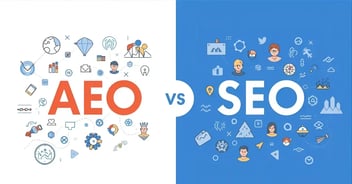
You can learn more about the differences of AEO and SEO here.
Use the answer first rule
Every heading should follow this pattern:
- Direct answer in 1 to 3 lines
- The why behind it
- The how to do it
- Examples, pitfalls, next steps
This gives speed and depth.
Extra detail that helps: If you have a claim that could be disputed, add a line that limits it. For example: “In most cases”, “For typical projects”, “If your site is crawlable and indexable”. This reduces the chance of AI over stating your point.
Publish the pages that remove doubt
If you want ChatGPT to confidently recommend you, remove uncertainty.
Most business sites are missing one or more of these.
Service pages that explain exactly what you do
- What the service is
- Who it is for
- What is included
- What is not included
- Typical timelines in NZ and Australia
- Common constraints (site access, compliance, supply lead times)
A pricing and process page
Even if you cannot publish fixed prices, you can publish:
- Pricing ranges
- What drives cost up or down
- How quoting works
- What information you need for an accurate quote
This is one of the easiest ways to get cited because people constantly ask “how much does it cost”.
Location and service area pages
NZ and Australia searches are location heavy.
If you operate across both countries, make that clear:
- Separate pages for NZ and Australia services if the offer differs
- Clear lists of regions and states you cover
- Local proof: projects, testimonials, case studies
Case studies that show real outcomes
Do not just show photos.
Include facts:
- Scope
- Timeline
- Constraints
- Result
- Location
If you want AI to mention your company for a specific job, it needs examples to learn from.
About page with credibility
Your About page should answer:
- Who owns the business
- How long you have been operating
- What experience matters
- Certifications and memberships
- Why you are trusted
Use fresh facts and cite them
AI visibility is influenced by what is current and verifiable.
Include 3 to 5 data points that reinforce the argument.
Even if you are not a publisher, the lesson is the same: visibility is moving into the answer layer, so being cited matters.
Step 3: Add credibility signals that AI and humans trust
This section is about reducing risk. AI does not want to recommend businesses that look anonymous, unverified, or unclear, especially when the query is local and commercial.
ChatGPT is cautious. It avoids recommending sketchy sources because the cost of being wrong is high.
Add author bios to informational content
If someone is reading “how to choose” advice, they want to know who wrote it.
Add:
- Name
- Role
- One sentence on experience
- Link to About page
- Optional: LinkedIn
This is easy and it lifts trust.
Add proof on every core page
Do not hide trust signals on one testimonials page.
Add proof in context:
- Certifications and memberships near relevant claims
- Reviews or short testimonials near the service description
- Case study snippets where the visitor is deciding
Extra detail worth adding:
-
If you have NZ and Australia work, label your case studies clearly by location. This helps AI associate you with the right country and reduces cross country confusion.
Make your business details consistent everywhere
If you operate in NZ and Australia, inconsistency is a killer.
Keep the same:
- Business name
- Phone numbers
- Addresses
- Service areas
- Core service names
This reduces the chance of AI mixing you up with a similar name or old address.
Extra detail that helps:
- Put your service areas in text on the page, not only in an image or a map embed.
- If you have multiple locations, give each one a dedicated page with its own contact details.
Step 4: Build off site authority that confirms you are real
This section is about independent confirmation. AI is much more confident when multiple reputable sources agree you exist, you do what you claim, and you are trusted.

This is where traditional SEO and AEO overlap heavily.
AI wants independent confirmation.
Earn backlinks that are actually relevant
One quality link from a respected industry site beats 50 random directory links.
Good link sources for NZ and Australia businesses include:
- Suppliers and partners
- Industry associations
- Local sponsorships and community pages
- Guest features and interviews
- Trade publications
Extra detail that makes this work:
-
Build links to the most quotable pages, not just the homepage. Service pages, pricing pages, and “how it works” pages are often the ones that get cited.
Be careful with “create a Wikipedia page”
This is commonly suggested, but it is not a simple marketing task.
Wikipedia has a notability guideline for organisations and companies, and most small businesses do not meet it.
Wikipedia also discourages conflict of interest editing, and paid editing requires disclosure of employer, client, and affiliation.
A better goal for most businesses is: build independent coverage first, then let Wikipedia happen naturally if it is justified.
Extra detail that helps you decide:
-
If you cannot point to multiple independent articles about your company from reliable publications, you are likely not ready. Focus on earning that coverage first.
Step 5: Promote content where questions are happening
This section is about distribution with intent. You are not promoting for vanity, you are putting helpful answers in the places people already ask, so your brand and expertise exist beyond your website.
If you want to be found in ChatGPT, you want your brand mentioned across the places ChatGPT can verify.
Turn one blog into multiple assets:
- Short LinkedIn post
- Simple YouTube explainer
- Google Business Profile update
- Helpful answers on forums like Reddit or Quora
The key: do not spam.
Answer the question properly, then reference your site only where it genuinely helps.
Extra detail that matters: Keep your wording consistent across platforms. If your service is called “vacuum assisted pumps” on your site, use that term consistently on social and directories. Consistency improves recall.
Step 6: Measure results and improve what gets cited
This section is where you turn AEO into a system. If you measure the right things, you can actually see what content gets referenced and what gets ignored.

If you only track rankings, you will miss the real movement.
Track citations and mentions, not just clicks
Because clicks can drop when answers are given without a visit, you need new KPIs:
- Do you get named
- Do you get linked
- Do your pages get cited as the source
This is the practical response to the trend Similarweb highlights: more answers, fewer clicks, more value in being the credited source.
Extra detail that helps: Track which exact URLs get cited. It is rarely random. It is usually the pages with clean headings, clear answers, and proof.
Build a monthly prompt tracker
Create 20 prompts that match your real services in NZ and Australia.
Example prompts:
- “Best [service] company in Auckland”
- “Best [service] company in Brisbane”
- “How much does [service] cost in NZ”
- “What is the process to [service] in Australia”
Each month, record:
- Who is mentioned
- Who is cited
- Which pages are linked
You will quickly see what content formats get reused.
Use Search Console and Bing Webmaster Tools for coverage
These tools help you confirm:
- What is indexed
- What has errors
- What pages are being discovered
Google provides a guide for submitting sitemaps and the Sitemaps report helps you see sitemap submission history and errors.
Bing provides sitemap submission in Bing Webmaster Tools.
Speed up discovery of updated pages
If you regularly update content, IndexNow can notify participating search engines when URLs are added, updated, or deleted.
This is not required, but it can help shorten the time between publishing and being discovered.
Note: IndexNow is not a guarantee of indexing. It is a notification system. It is still worth using if you publish regularly, because it reduces “waiting around” for discovery.
Ready to see if ChatGPT is recommending your business?
Most businesses assume they will “just show up” in AI answers, but it rarely works like that. If your pages are hard to crawl, your services are unclear, or your credibility signals are weak, you might be invisible even if you rank on Google.
Use our free AEO Visibility Checker to find out:
- Whether your business appears in ChatGPT style searches
- What pages and information are being surfaced (or missed)
- The biggest fixes that will improve your chances of being cited in NZ and Australia
.webp?width=352&name=Untitled%20design%20(18).webp)